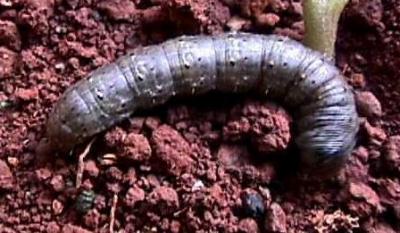
Cutworm (Agrotis sp.) Early instars are about 7-12 mm long. Fully grown caterpillars are 35-50 mm long. (c) A.M. Varela, icipe
African bollworm
Helicoverpa armiguera
and other caterpillars
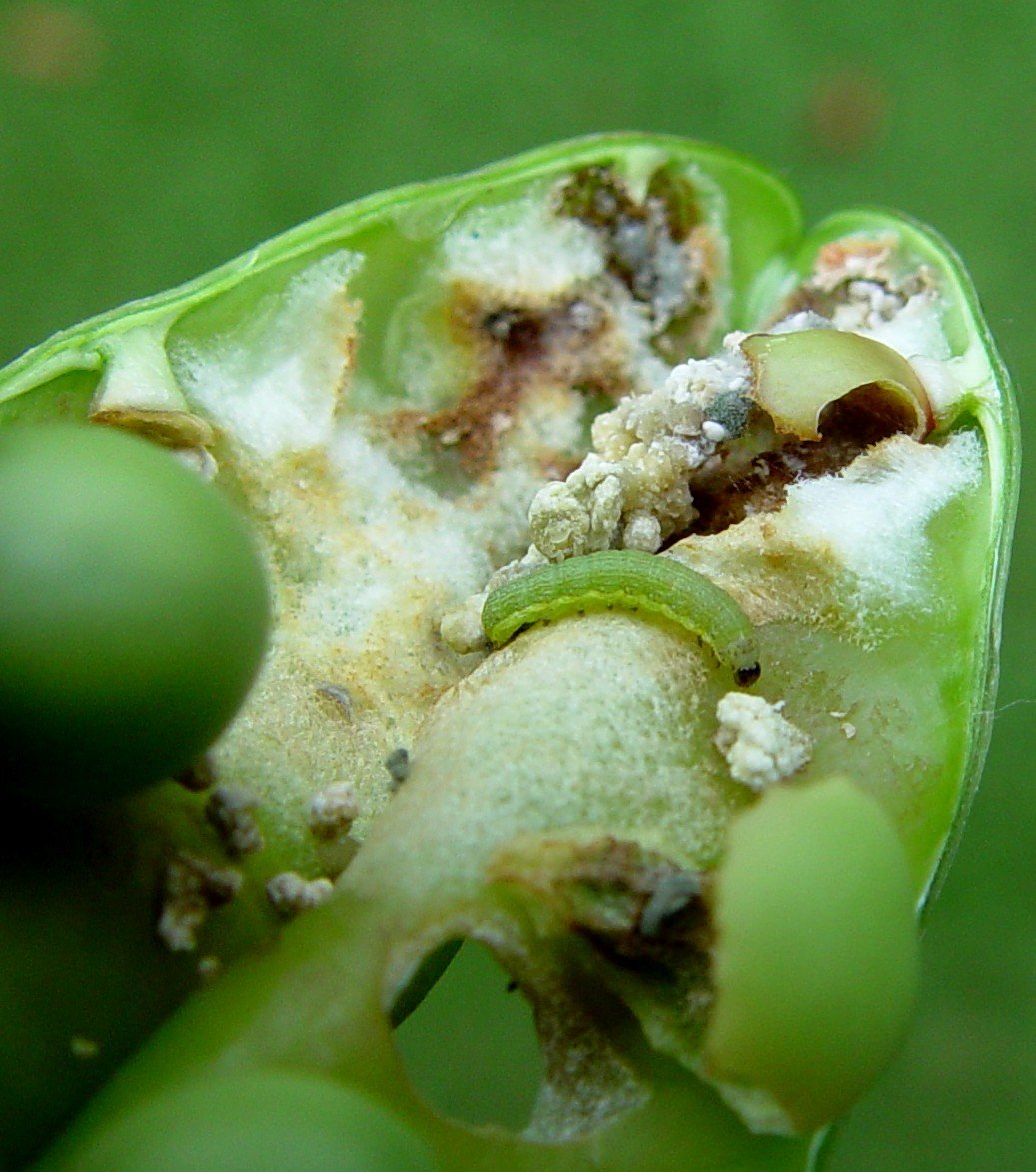
Damage by the beet armyworm (Spodoptera exigua) on garden peas. Real size about 2.5-3 cm long. (c) A.M. Varela, icipe
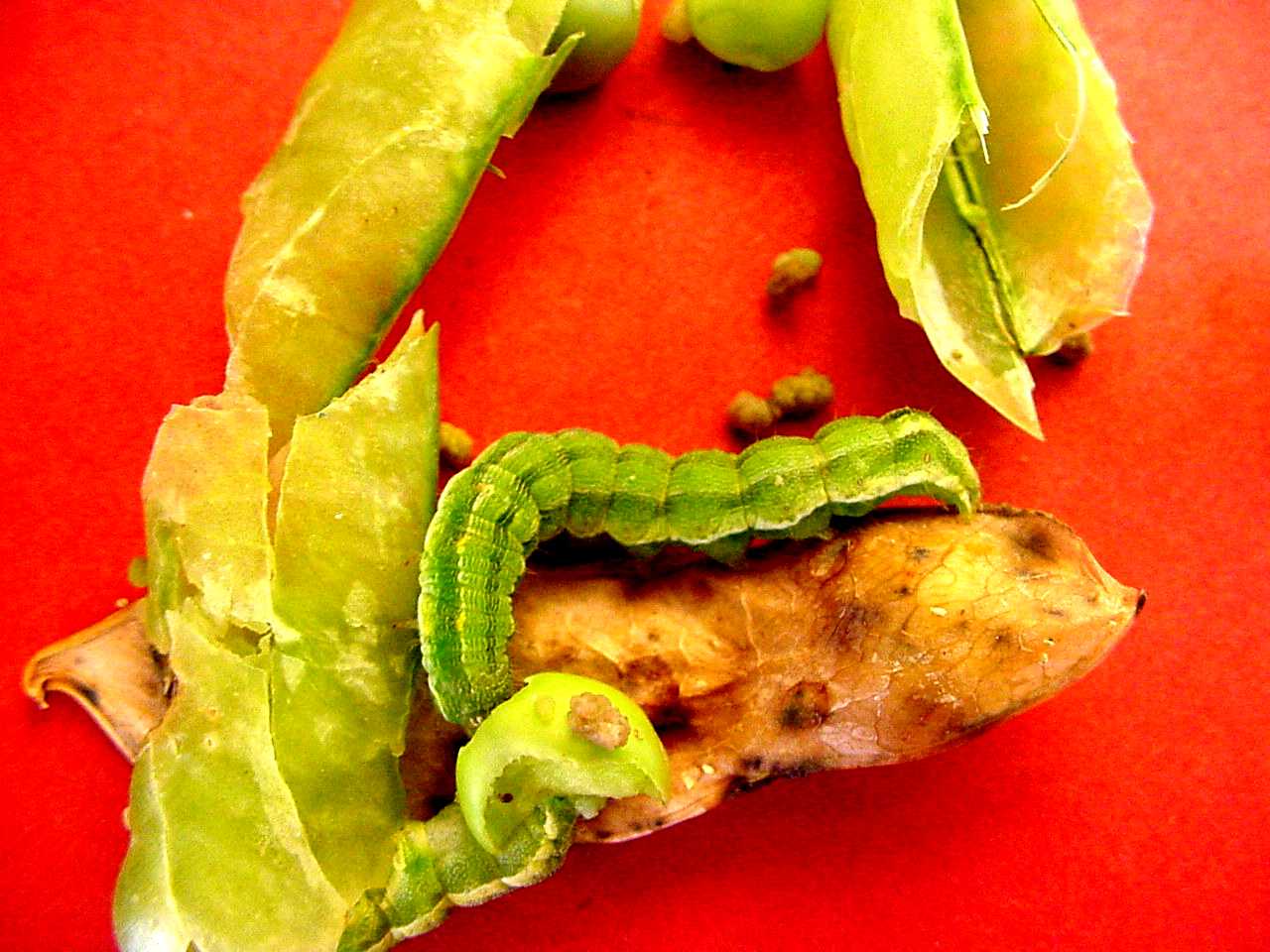
African bollworm feeding on peas. Fully grown caterpillars are 3-4 cm long. (c) A.M. Varela, icipe
Aphids
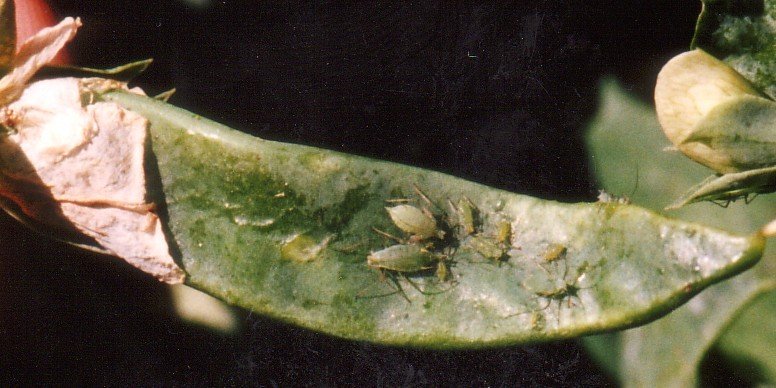
Pea aphids on a snow pea pod. (c) A. M. Varela, icipe
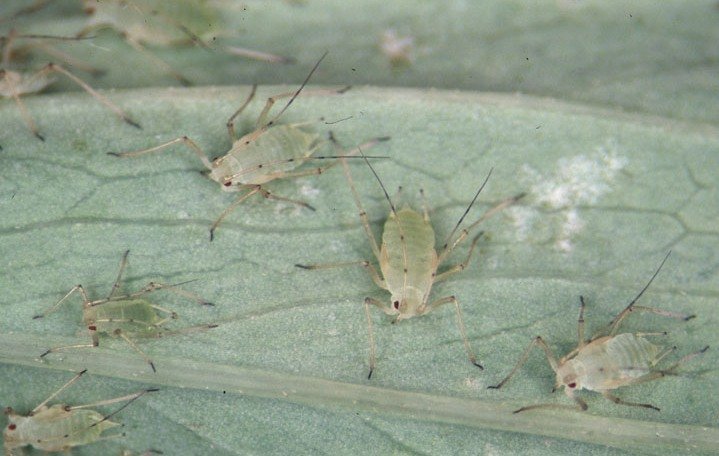
The pea aphid (Acyrthosiphon pisum) is a large, rather long-bodied aphid, with long slender appendages (legs and cornicles), which forms colonies on young growth and developing pods of many. Wingless forms of females are usually 2.5-4.4mm long, winged females range from 2.3-4.3 mm. (c) Whitney Cranshaw, Colorado State University, Bugwood.org
Pea blue butterfly
Lampides boeticus
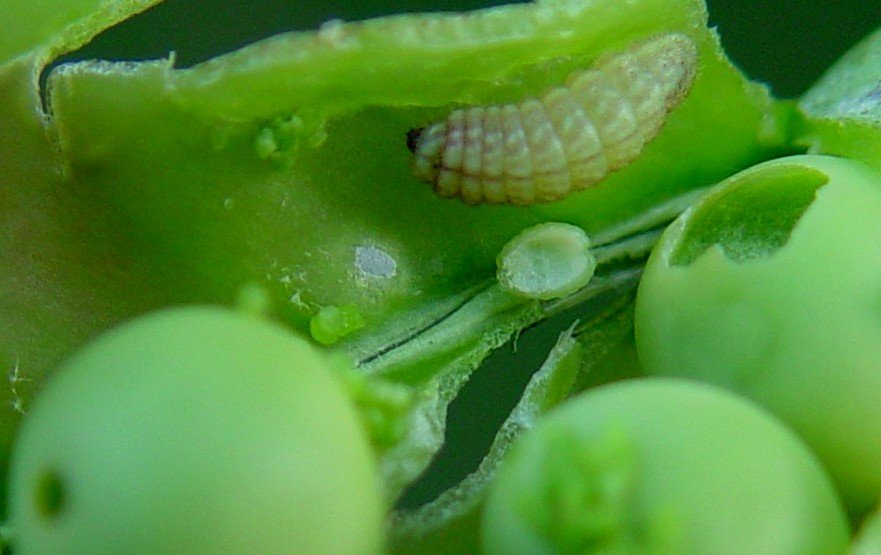
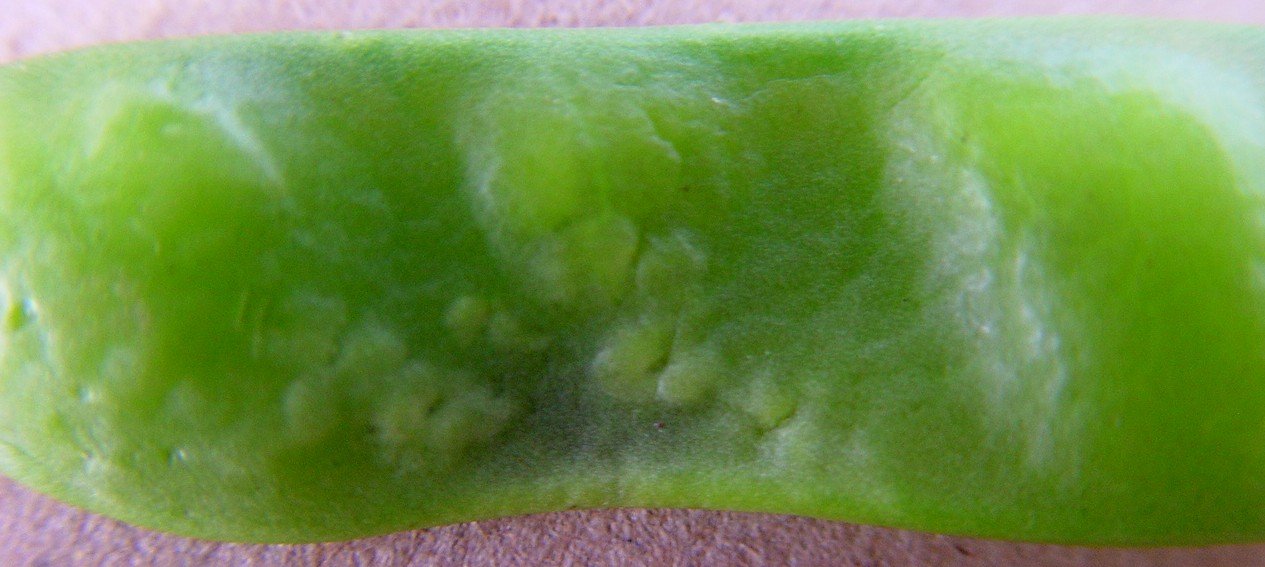
Caterpillar of the pea blue butterfly and damage to peas (Lampides boeticus) (c) A.M. Varela, icipe
Thrips
Sericothrips spp, Frankliniella occidentalis, and Thrips tabaci
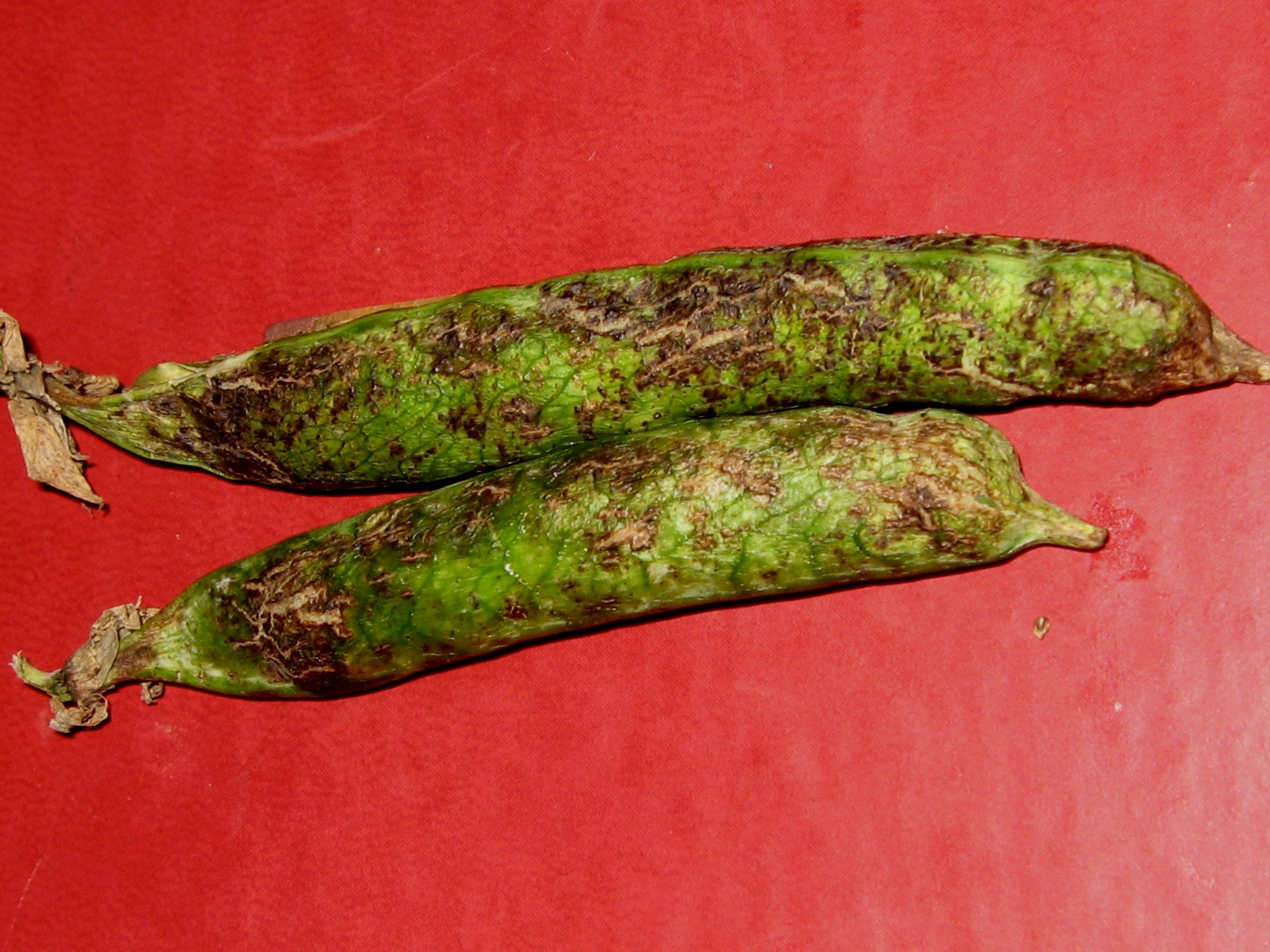
Thrips damage on snowpea (c) A.M. Varela, icipe
Pigeon peas infested by thrips (c) A.A. Seif
Leafminers Liriomyza spp. and Chromatomyia horticola
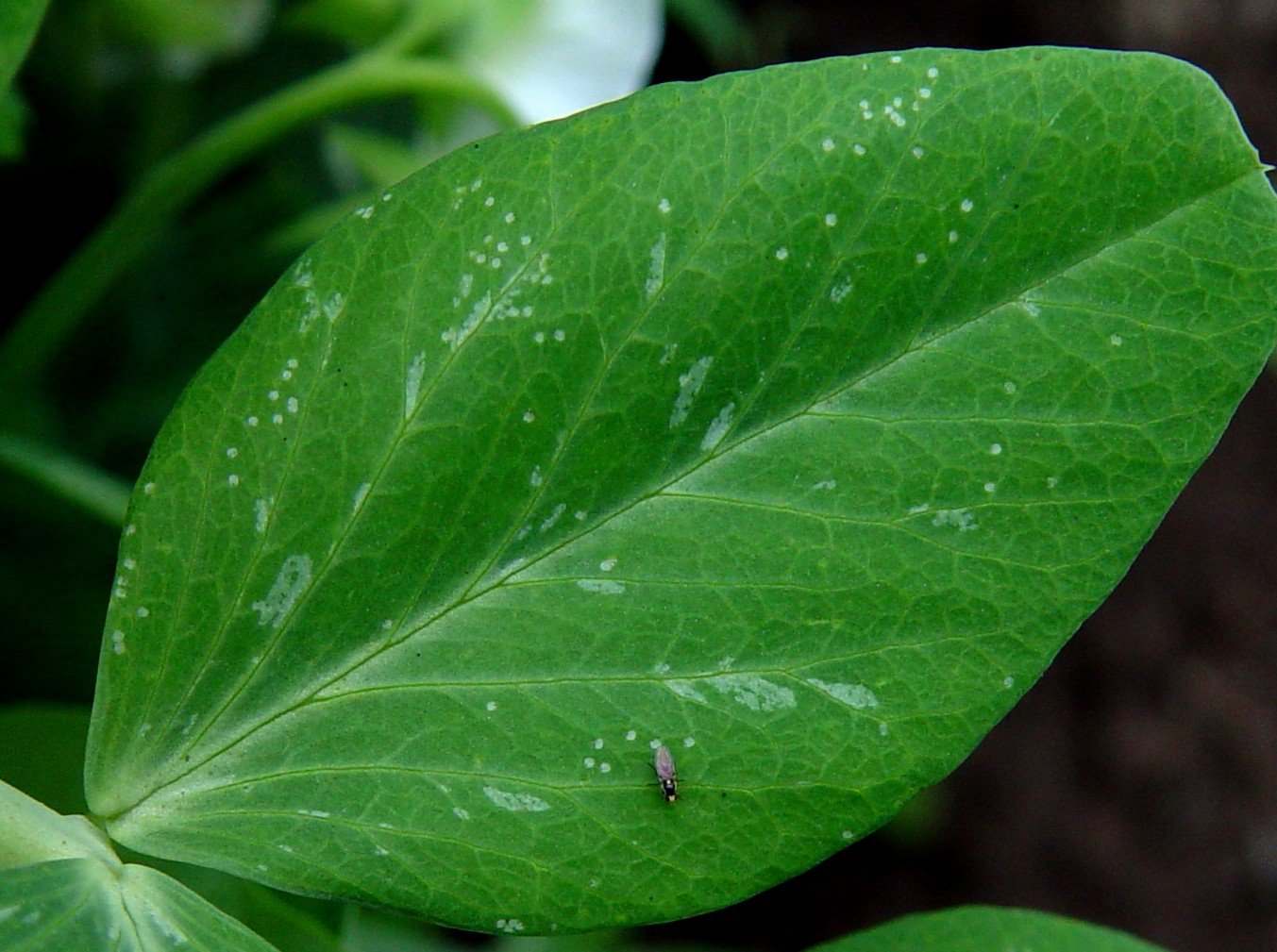
Leafminer fly and damage caused by adult leafminer on peas. (c) A.M. Varela, icipe
Spider mites
Tetranychus spp.
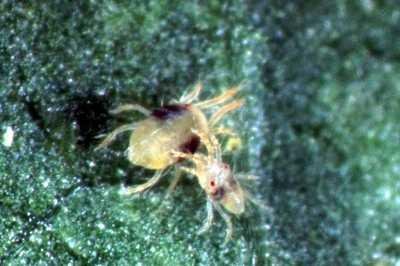
Two-spotted spider mite (Tetranychus urticae) . The adult female is 0.6 mm long. The male is smaller. (c) Warwick HRI, University of Warwick
Root-know nematode
Meloidogyne incognita, M. javanica
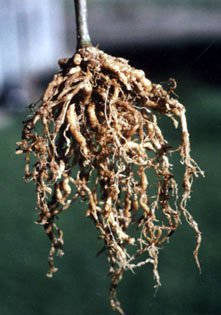
Root-knot nematode galls on tomato roots). Root-knot nematodes ()Meloidogyne incognita / M. javanica) affected plants are normally stunted and eventually wilt and die. The most characteristic symptom is formation of root galls (knots) and these can be seen with the naked eye. Affected roots rot. (c) Bridge J., IIP. Courtesy of Ecoport
Storage pests
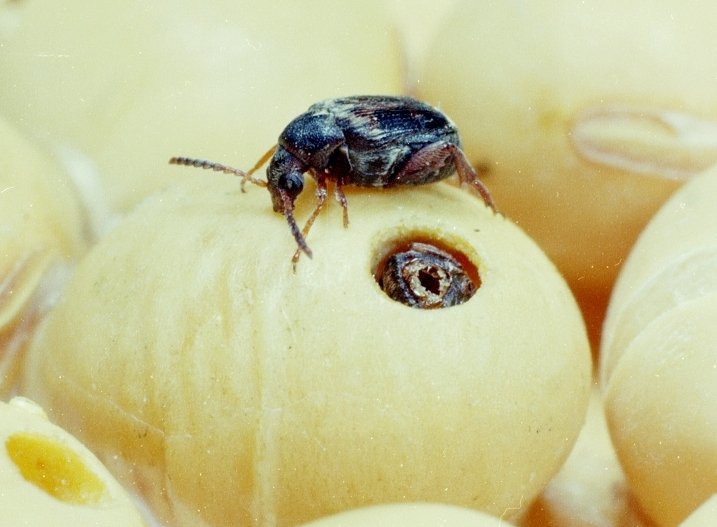
Bean bruchid (Acanthoscelides obtectus) on soybean. Adults are 3-4.5 mm long, grey-brown. (c) Clemson University – USDA Cooperative Extension Slide Series, Bugwood.org