All milk cans, containers and utensils must be properly washed and disinfected. The procedure is as follows:
- Wash hands with soap and rinse.
- Washallcontainerswithsoap ordetergentandsuperbriteorsimilar non metal scouring pad material (sisal or plastic sacking can also be used provided it is washed and boiled after use).
- Rinse out the soap/detergent
- Sterilise in boiling water
- Dry upside down in the sun on a clean table or rack. The sun is a very good steriliser as well, but care should be taken that recontamination from blowing dust does occur.
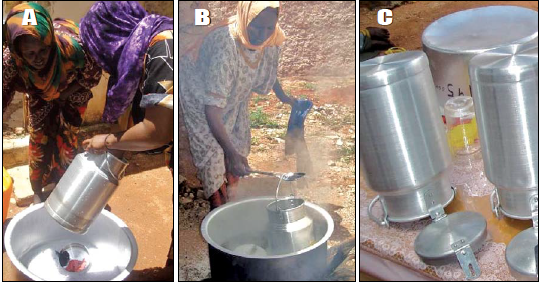
down in the sun on a clean table or rack
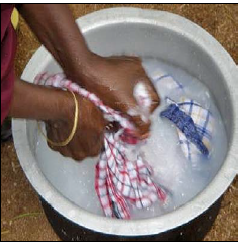
Do NOT dry containers inside with any cloth. Cloths may be very dirty and can add serious contamination to an otherwise clean container.
Any cloth used for straining milk must be properly rinsed to remove milk with cold clean water after use, then washed with detergent and sterilised along with the milk cans. The boiling water can then be used as a water bath to pasteurise milk in the milk cans.
How to clean inappropriate containers
Although metal cans (aluminum or stainless steel) are the best type of milk containers, they are not always available in any practical sizes. So in the absence of proper containers, plastic jerricans are mostly used. Plastic jerricans are light, and seem practical transport containers, but they are almost impossible to clean inside. However if nothing else is available, the following cleaning procedures will give a fairly clean plastic container:
- Rinse the jerrican for all traces of milk.
- Boil some clean building/river sand in water, add a handful to the jerrican and use this sand for shaking around the jerrican till all spots and visible contamination has disappeared.
- Discard the sand.
- Repeat the washing with dishsoap or similar detergent (do not use omo – it is very diffi cult to rinse out again and will leave an unpleasant taste).
- Rinse with clean water.
- Sterilise with boiling water – swish the boiling water around till all corners have been sterilised.
- Discard the water.
- Close the container with the sterilised lid and keep it closed till you need to use it.
Water quality
Milk containers and the hands of milk handlers need to be washed with soap and clean water. Many places the available water is not clean. However all chemists can stock very cheap water purification chemicals such as Aquaguard or similar. A bottle top full of Aquaguard put into a 20L jerrican of water and left for 24 hours, will have made the mud settle and purified the water so it can be used for drinking, or cleaning udders, hands and utensils. Boiling water is also good but may not always remove all the mud. Ask the chemist for the best and cheapest water purification methods.