Aphids on cowpea (Aphis craccivora), they are about 1-2 mm long (c) A.M. Varela, icipe
Black legume aphid (Aphis craccivora) is a relatively small aphid. Immatures are slightly dusted with wax, adults without wax. They are about 1-2mm long. (c) Clemson University – USDA Cooperative Extension Slide Series, Bugwood.org
Cowpea aphids tended by ants. (c) A.M. Valera, icipe
African Bollworm
African bollworm (Helicoverpa armigera) on beans. Caterpillars are 3 to 4 cm in length. (c) A.M. Varela, icipe
Flower or Blister Beetles
Blister beetle(Mylabris oculata) (c) Botha AD (Courtesy of EcoPort, www.ecoport.org)
Thrips
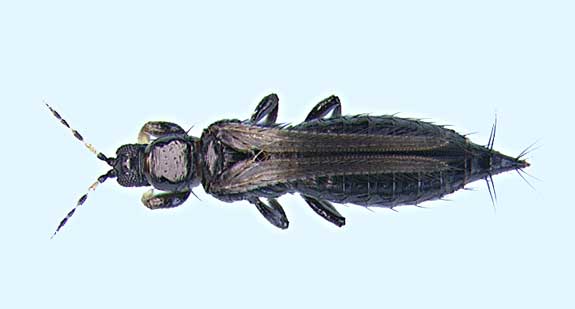
Flower thrips (Megalurothrips sjostedti). Real size (0.9 to 1.1 mm) about the size of a flea, are barely visible to the naked eye. (c) Georg Goergen (Courtesy of EcoPort, www.ecoport.org)
Thrips damage on bean pods (c) A.M. Varela, icipe
Bugs
The pod sucking Riptortus bug(Riptortus dentipes) is about 1.5cm long. (c) Georg Goergen, www.ecoport.org
Spiny brown bug on French bean plant. (c) A.M. Varela, icipe
Legume Pod Borer
Legume pod borer (Maruca vitrata) reach a length of 18 mm (c) Courtesy EcoPort (http://www.ecoport.org): P. Ooi
Cowpea Weevils
Cowpea seed weevil on cowpea (c) F. Haas, icipe
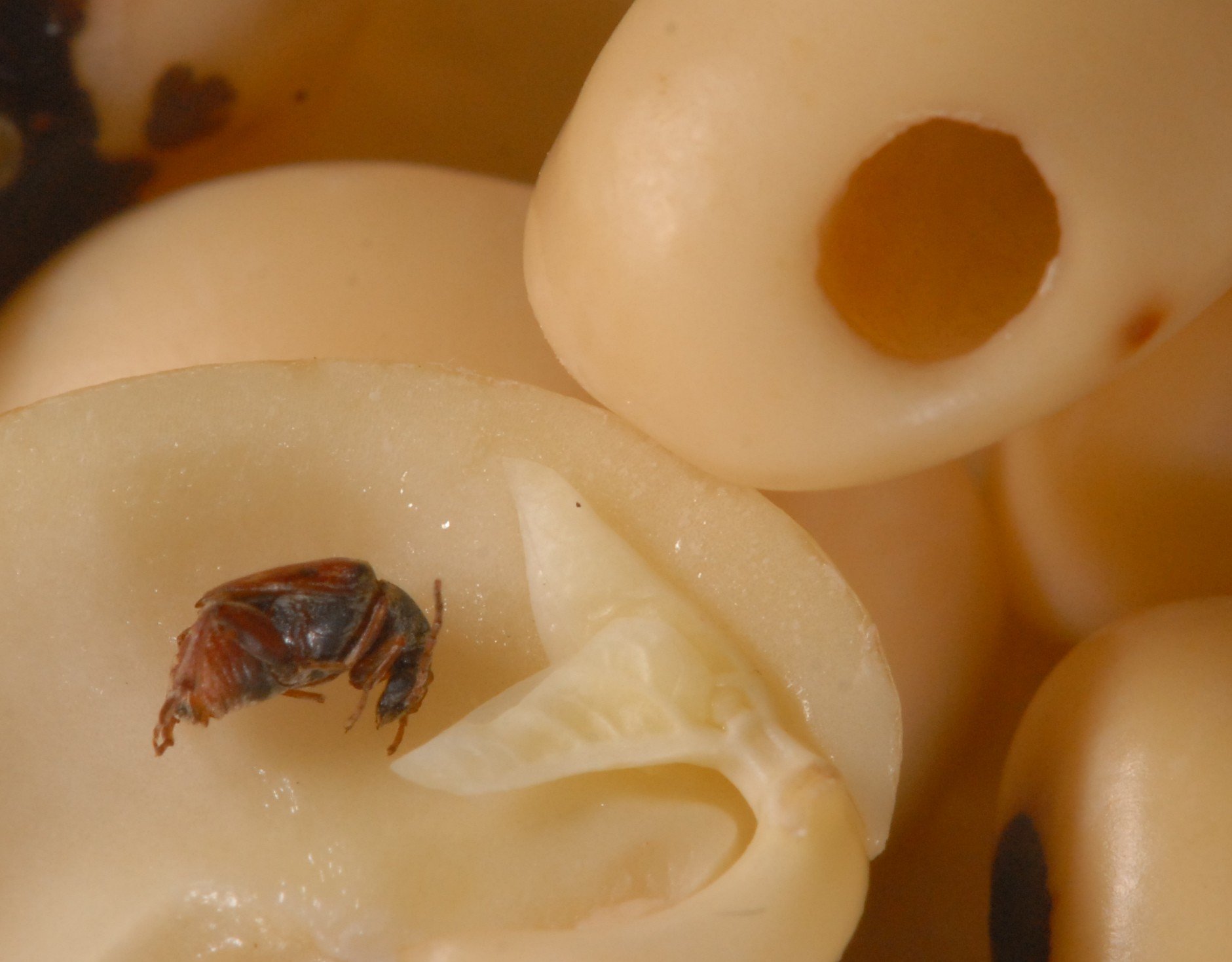
Cowpea seed beetle (Callosobruchus maculatus) adults are 2.-3.5 mm long. The adults emerge through windows in the grain, leaving round holes that are the main evidence of damage (c) F. Haas, icipe
Cowpea damaged by cowpea seed beetles and weevils (Callosobruchus spp.) (c) A. M. Varela, icipe
Root-knot Nematodes
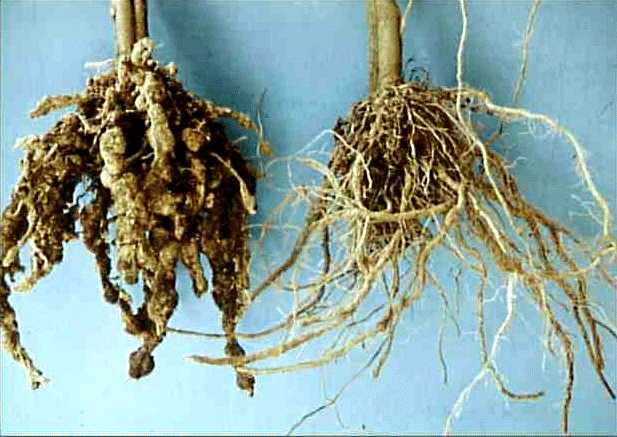
Root-knot nematodes(Meloidogyne incognita / M. javanica) Roots of severely attacked (left) and healthy plant (right). Affected plants are normally stunted and eventually wilt and die. The most characteristic symptom is formation of root galls (knots) and these can be seen with the naked eye. Affected roots rot. (c) A. M. Varela, icipe