Credits:Biovision-Infonet
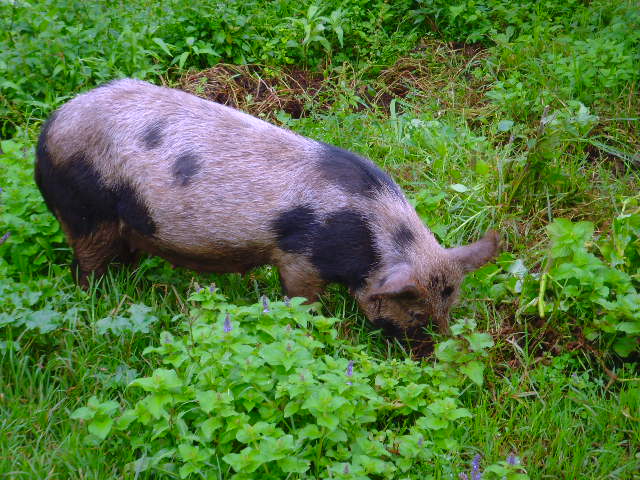
(c) F. Wertli, Biovision
(c) S. Gikonyo, Kenya

(c) Tina Marie Lythgoe
Introduction
Origin of pigs
The pig is one of the oldest domesticated animals. It is found throughout the world especially in regions where there are no social or religious objections to pork consumption.
The majority of the breeds we now know are descended from the Eurasian Wild Boar (Sus scrofa). Archeological evidence from the Middle East indicates domestication of the pig occurs as early as 9,000 years ago, with some evidence for domestication even earlier in China. Figurines, as well as bones, dating to the sixth and seventh millennia BC have been found at sites in the Middle East. Pigs were also a popular subject for statuettes in ancient Persia. From here, the pig spread across Asia, Europe and Africa. One interesting point, while most livestock were utilized initially by nomadic peoples, swine are more indicative of a settled farming community. The reason for this is simply that pigs are difficult to herd and move for long distances. Pigs have become vital to the economy in parts of the world. For example, there exists a “pig culture” in New Guinea as strong and complex as any African culture based on cattle.
Characterization of current pig production in East Africa
The pig industry is characterized mainly by farms having 2 – 5 sows weaning 1 – 2 quite small litters yearly. This low productivity may be attributed to any of the following:
- A short sow productive life (sows are killed early due to poor productivity).
- Generally, poor sow nutrition especially during the gestation and lactation periods.
- Poor housing that predispose the sows to stress
- Poor quality boars or mating system
- Poor feed quality, high feed prices leading to inadequate feeding
- Presence of sub-clinical reproductive diseases leading to low litter size and high pre-weaning mortality
- Long fattening period leading to low returns
- Market demand fluctuation: during periods of high demand the country has had to import pork products to fill the gap